Historic Outcomes at 2026 Assembly: New Leadership, New Structures, and Global Standards
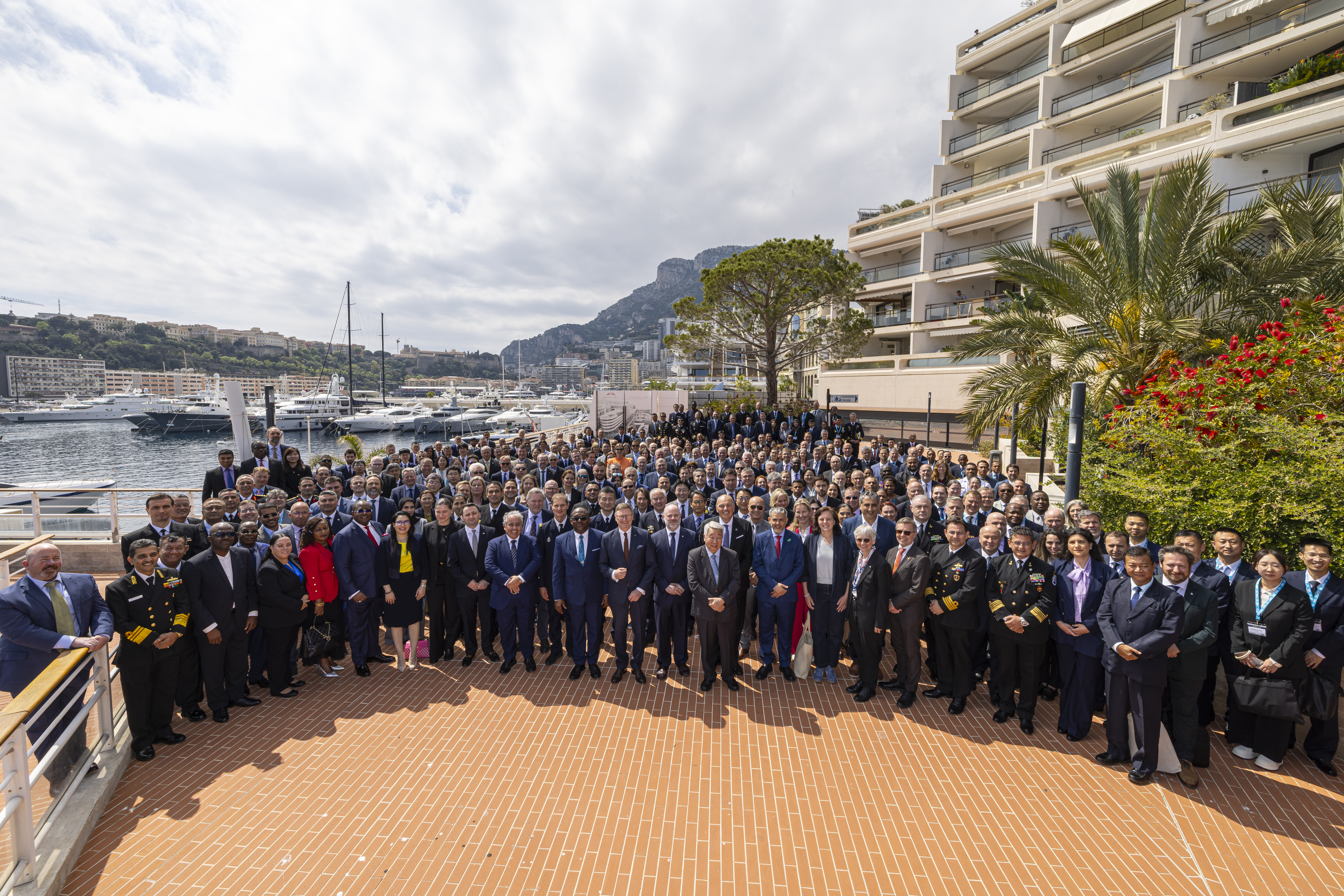
Published: 04/05/2026 - 10:28Representatives of the 104 IHO Member States reached decisions which will change the future of the organization during the 4th session of the Assembly. This triennial event held in Monaco saw crucial advancements in hydrography and international collaboration including the creation of a new entity, a new office, as well as new leaders.
Strategic Initiatives with the Creation of New Entities
One of the main outcomes was the approval of the resolution to establish an IHO Infrastructure Centre in Busan. Hosted by the government of the Republic of Korea, the centre is expected to play a key role in the development and implementation of modern products and services, notably the S-100 framework. This will be the 1st time in the IHO’s history that it has an office outside of Monaco.
Another major outcome was the approval for the establishment of a GEBCO Secretariat. More than 100 years after Prince Albert I of Monaco launched the General Bathymetric Chart of the Ocean, the programme will finally have its own dedicated team to bring to completion its mission of mapping all the world’s oceans. The GEBCO Secretariat will be funded by the Government of Monaco for an initial period of three years.
History in Motion
History was made with the adoption of the new standard for the Polygonal Demarcations of Global Sea Areas (S-130). This marks a major step forward on a question which has been in discussion for more than 50 years. This new standard will provide a system of unique numerical identifiers for oceans and seas, instead of names, which can be ingested in geographic information systems. The S-130 dataset will also define the technical boundaries of the global sea areas and will enable countries to then use their name of choice in their national products and services.
Changes in Leadership
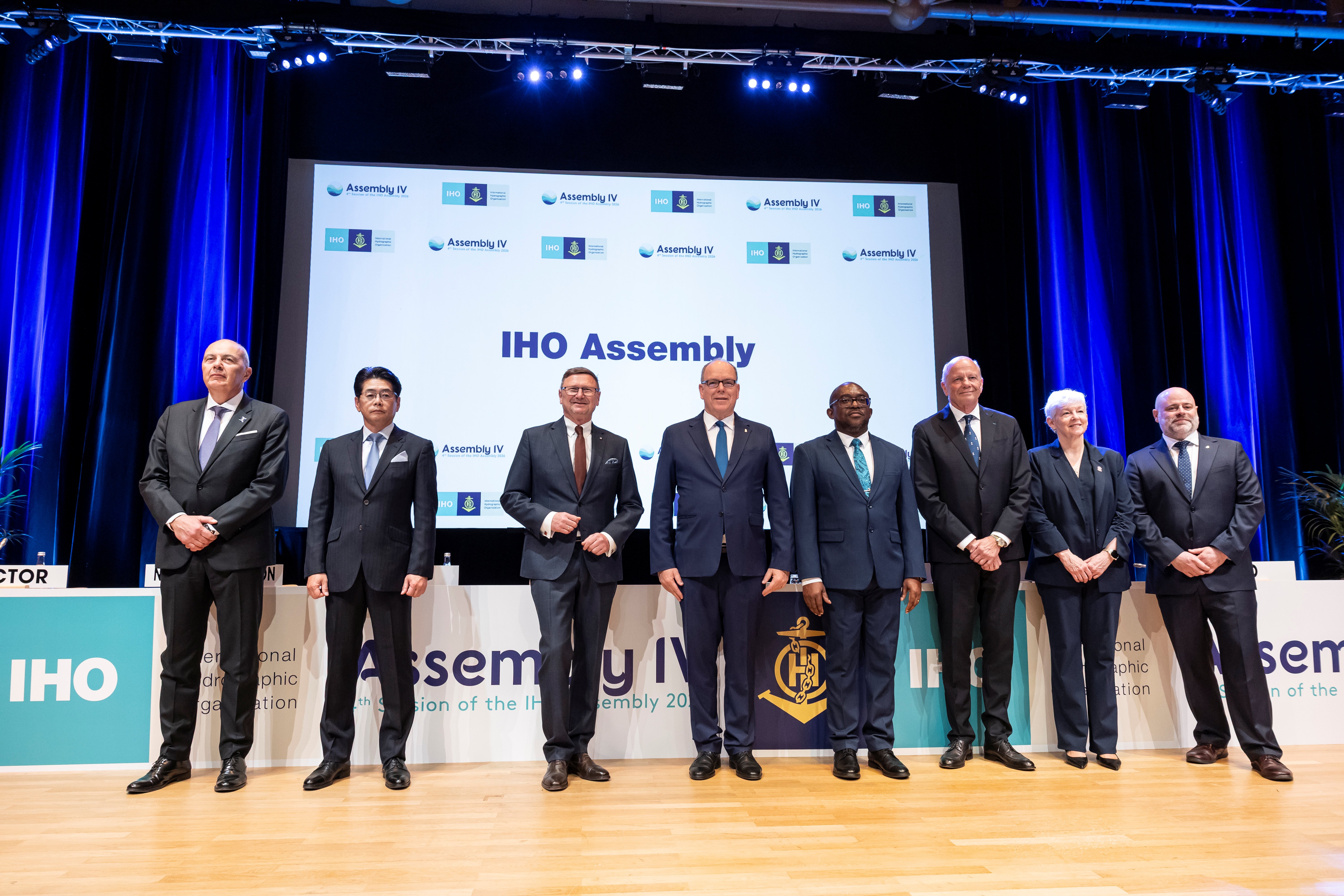
During Assembly, Member States elected new leadership to guide the Organization over the coming years. Rear Admiral Luigi Sinapi (Italy) was elected to serve as Secretary-General of the International Hydrographic Organization for a three-year term beginning on 1 September 2026. In addition, Mr Adam Greenland (New Zealand) was elected as Director for a six-year term commencing on the same date. These appointments reflect the Assembly’s confidence in their expertise and commitment to advancing the Organization’s mission in support of safe navigation and sustainable use of the oceans.
With many organizations around the world stating that having skilled staff is a strategic priority for them to be able to fulfil their work, Assembly also agreed work should be undertaken to support inspire, recruit and maintain a competent workforce. This resolution states that, in order to provide improved services that contribute to the sustainable management of our seas and oceans, the IHO must modernise its recruitment and retention approaches to remain an attractive field. By implementing key strategies to broaden recruitment and maximise career development opportunities, the IHO will be better able to deliver efficiently and effectively for Member States.
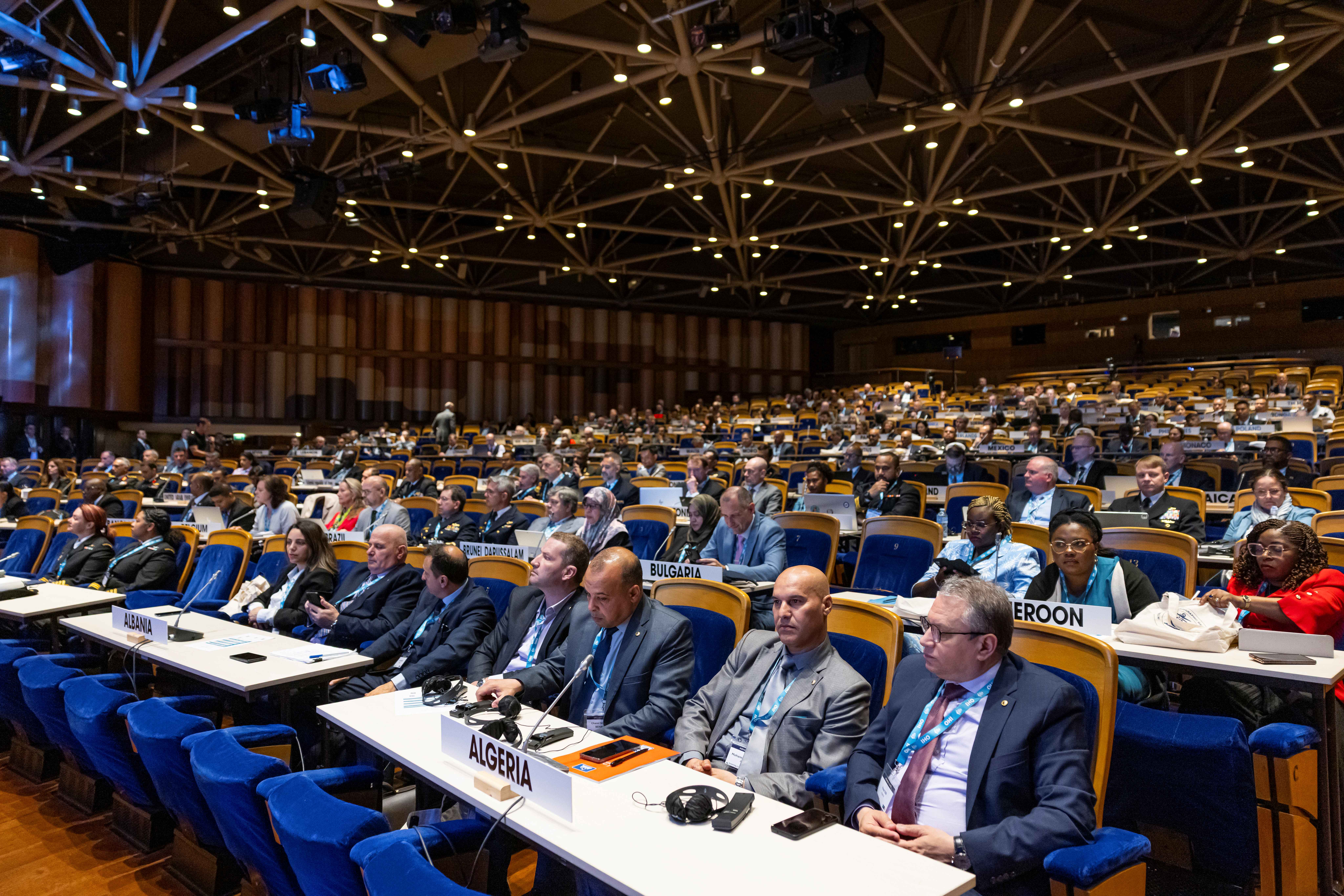
Other outcomes from the meeting include the approval of the new IHO Data Protection Scheme subscription model and the renewal of the cooperation agreement between the IHO and the International Organization for Marine Aids to Navigation (IALA). The IHO also officially signed a Memorandum of Understanding with ProtectedSeas, strengthening the collaboration between the two institutions on developing a product specification for Marine Protected Areas (S-122). Once finalized, this would help support conservation initiatives by making rules and regulations more readily available to boats entering these areas of key interest.
Approval of the IHO Strategic Plan for 2027 – 2032
Member States approved a new IHO Strategic Plan which provides a framework to guide the organization’s activities and priorities for the period 2027–2032. It addresses emerging challenges faced by the organization, such as digital transformation, implementation of S-100, growing demand for marine spatial data, and the need for global hydrographic capability.
The Assembly was chaired by Mr Michel Amafo from Suriname and vice-chaired by Mr Laurent Kerléguer from France.
----------------------------------------------
For more information about the 4th Session of the IHO Assembly and to access the event pictures, please visit: https://iho.int/en/4th-session-of-the-assembly-2026


Share this page: