A Decade of Progress & Growth
Published: 08/11/2026 - 06:00The amended IHO Convention entered into force ten years ago, marking a major milestone in the modernization of the Organization. It transformed the IHO’s structure and governance, reshaping international cooperation in hydrography. Among the changes, it introduced a streamlined process for countries to join the organization, which broadened international participation in hydrographic affairs and led to more consistent implementation and continuity of global initiatives, such as the IHO-Singapore Innovation Lab and the IHO e-learning centre.
The IHO Convention that established the IHO as an intergovernmental organization with its own legal personality came into force in 1970. Over the following decades, demand for hydrographic data continued to grow. In response, the IHO recognised the need to modernise its governance framework and adapt its policy direction to meet evolving global requirements. This led to the approval of the Protocol of Amendments to the IHO Convention at the 3rd Extraordinary International Hydrographic Conference in April 2005. The amended convention entered into force on 8 November 2016.
A New Framework for the IHO
The amended convention aimed to preserve the strengths of the Organization, address its limitations, and establish a more effective and responsive governance system. Key changes included:
- The establishment of Council, which meets annually to strengthen governance and strategic oversight.
- A shorter programme cycle, with Assemblies every three years instead of Ordinary Conferences every five, enabling faster decision-making and implementation.
- A simplified accession process, removing the requirement for States that are members of the United Nations (UN) to obtain approval from two-thirds of existing IHO Member States before joining.
- The replacement of the position of President of the Directing Committee with that of Secretary-General, aligning the IHO's governance structure with that of other intergovernmental organizations.
- The Organization’s scope of work was broadened and cooperation with other international organizations was facilitated.
“The Protocol of Amendments was far more than an institutional reform: it marked a defining moment in the history of the International Hydrographic Organization, transforming its governance and strengthening its ability to serve the international community. A decade later, its legacy is reflected in a more inclusive, dynamic and influential Organization, better equipped to address the evolving challenges of our oceans and the maritime world. As we enter a new era of digital transformation, international cooperation and global ocean stewardship, our responsibility is not merely to preserve this legacy, but to build upon it with renewed ambition and determination. To innovate, to unite and to advance: this is how we honor the vision of those who shaped this historic reform, and how we will ensure that the IHO continues to lead, inspire and deliver for generations to come.”
- Rear Admiral Luigi Sinapi, Secretary-General - International Hydrographic Organization
Milestones and Achievements
One of the main outcomes of the reform has been the significant increase in IHO membership. Previously, accession to the IHO typically took two to three years. By removing this requirement for UN Member States, the new convention made accession faster, simpler, and more straightforward.
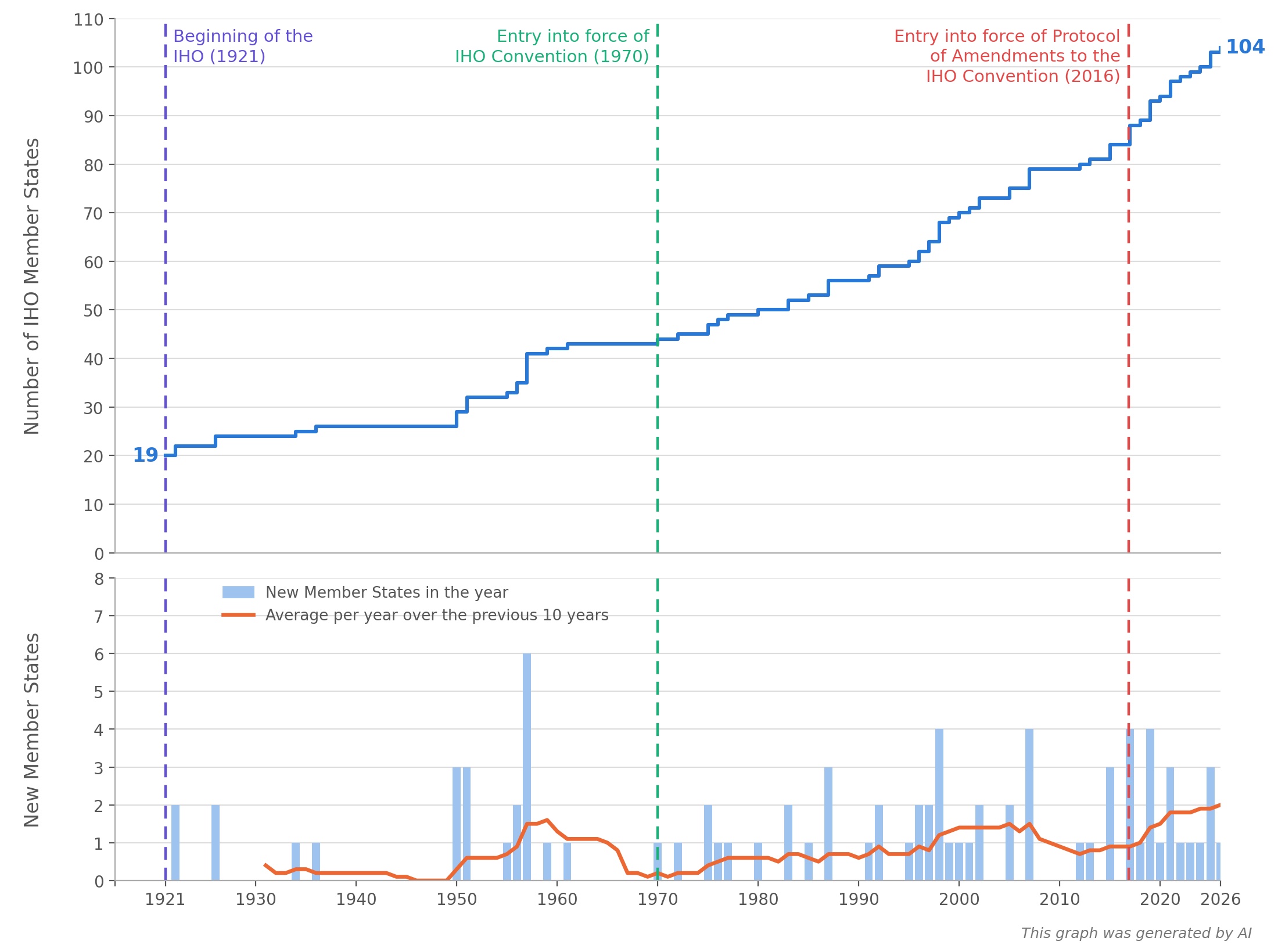
The impact has been both immediate and sustained: twenty new Member State joined the Organization between 2017 and 2026, representing almost 20 per cent of the 104 IHO Member States.
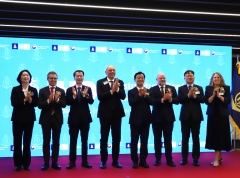
Additionally, major advancements have been witnessed over the last ten years, such as the entry into force of the S-100 framework and the launch of global initiatives like the Empowering Women in Hydrography project. Furthermore, on 10 November 2026, the Organization will inaugurate the IHO Infrastructure Centre in the Republic of Korea.
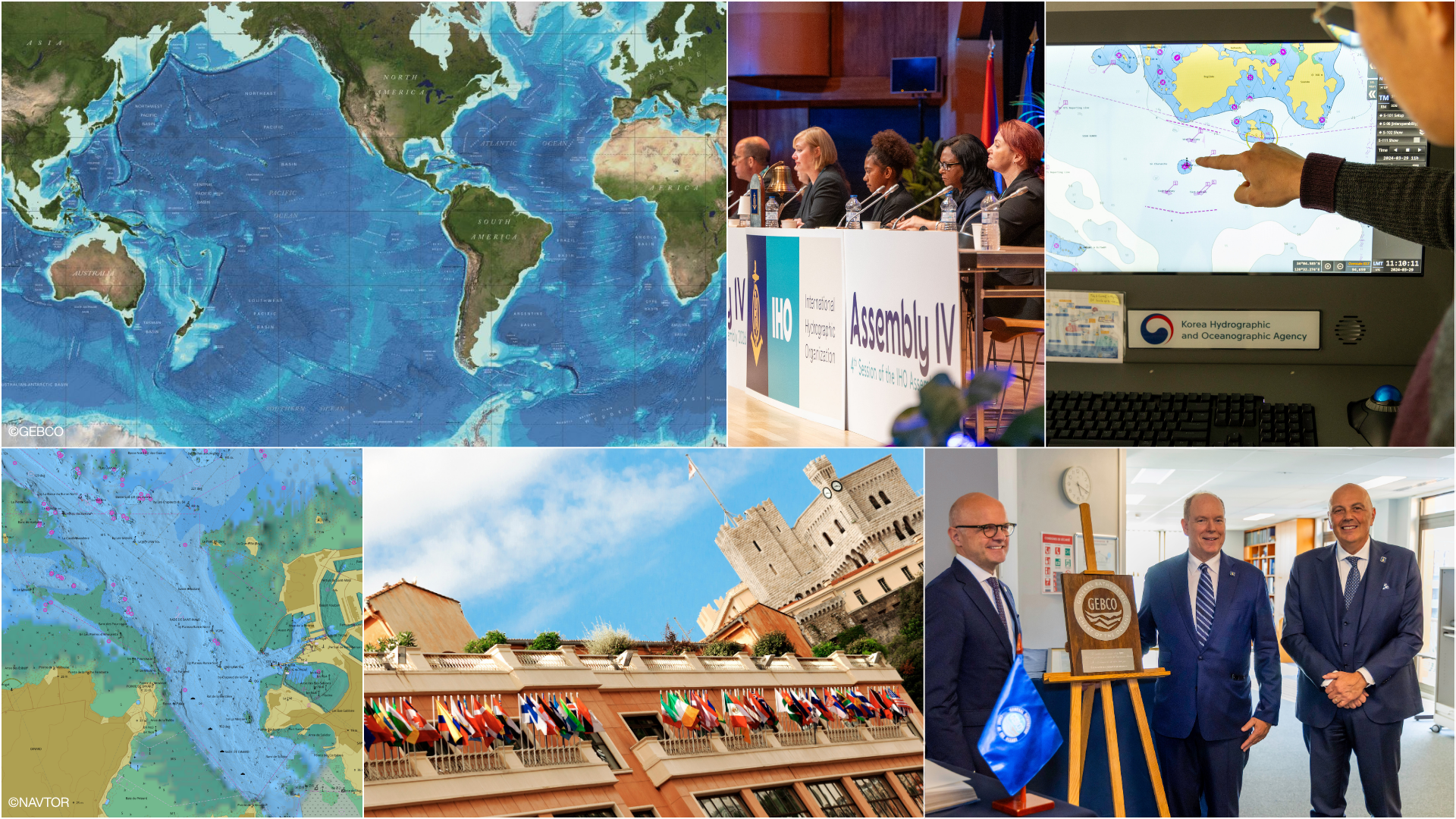
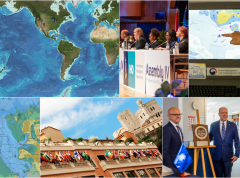
In the past ten years, the IHO has also played a major role in advancing progress in ocean mapping. IOC-UNESCO and the IHO are the joint parent organizations of the General Bathymetric Chart of the Oceans (GEBCO). One of the programme’s flagship initiatives is The Nippon Foundation-GEBCO Seabed 2030 Project, which has significantly contributed to the increase in available seabed data worldwide. The percentage of the ocean floor mapped to modern standards has risen from around 6% in 2016 to 28.7% in 2026. More recently, the IHO established a permanent secretariat for GEBCO in Monaco at the presence and under the auspices of H.S.H. Prince Albert II of Monaco.
These visible achievements reflect the success of the reform in fostering broader international participation and extending the global reach of hydrography.
--- ---
The Government of Monaco is the depositary for the Convention on the IHO. States wishing to join the IHO can deposit their instrument of accession with the Government of Monaco.


Share this page: