New Direction at the IHO
Published: 04/09/2026 - 15:02“Innovate, unite, and advance”. This is the ambition announced by the incoming Secretary General of the IHO as the new leadership was officially presented to HSH Prince Albert II of Monaco. Following the elections by Member States, the new directing team at the IHO Secretariat came into office on 1 September 2026 and will lead the organization for the next three years.
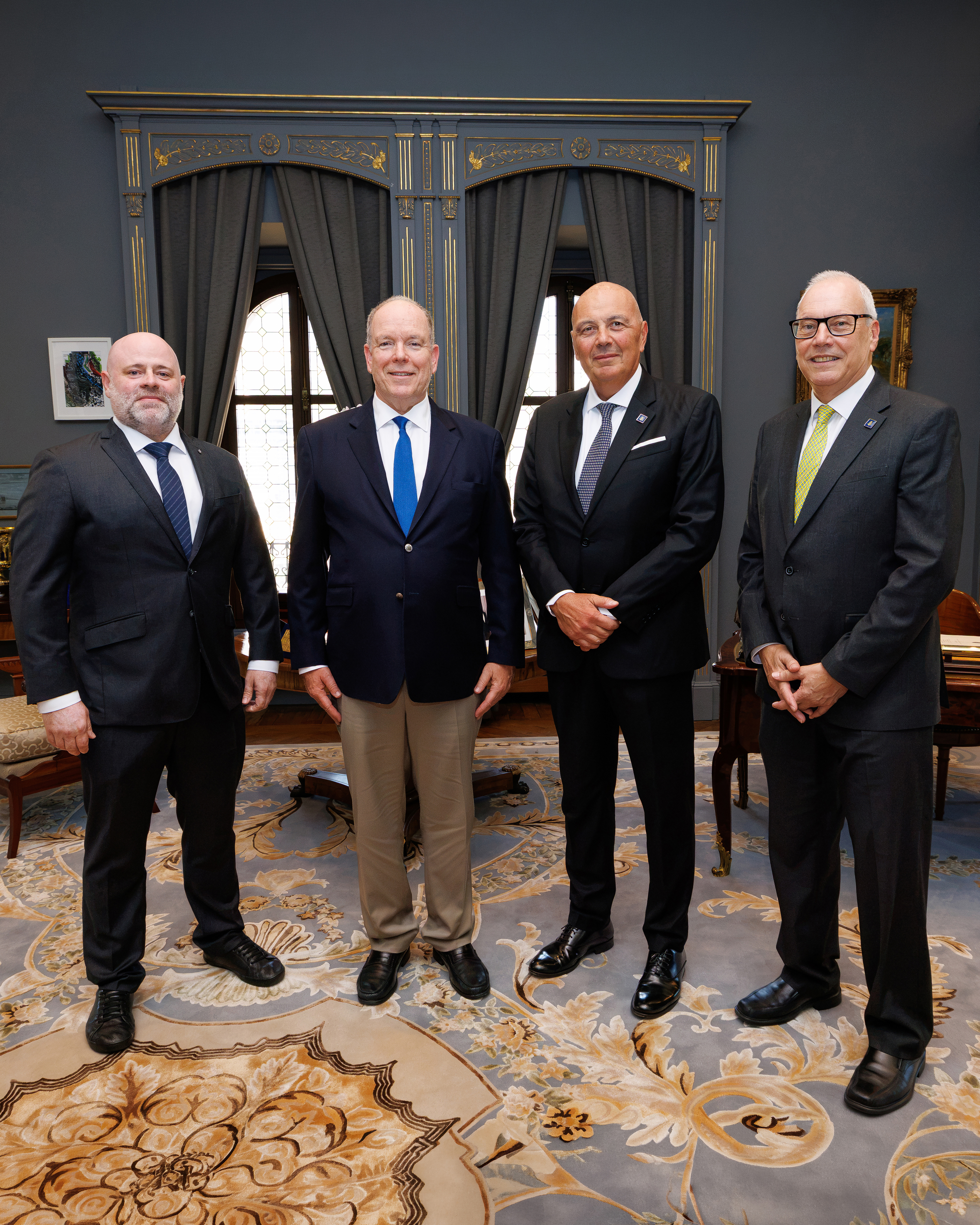
© Michael Alesi / Palais princier
Rear Admiral Luigi Sinapi from Italy assumed his role as Secretary General, Mr Adam Greenland from New Zealand became Director for the Inter-Regional Coordination and Support Programme, and Dr. John Nyberg from the USA continues his term as Director for the Technical Programme.
Rear Admiral Sinapi is an experienced hydrographer and naval officer who has been actively promoting capacity-development and international cooperation throughout his career, and in particular since 2020 as Director of the IHO. In this new role he intends to strengthen cooperation both regionally and with other intergovernmental organizations and industry. He plans to improve seabed mapping so every country benefits from safer navigation and he intends to continue building hydrographic capacity so all nations have the tools to map and protect their waters.
“Hydrography is not just a science, it is a bridge between nations, economies, and people” highlights Rear Admiral Sinapi.
This new leadership team takes the helm of the organization in a pivotal time for the global ocean community with the implementation of the S-100 framework currently underway around the world. S-100 is revolutionising how ocean data is gathered, shared and used and opens the possibility for users to benefit from near real time data on key ocean parameters. This will not only help decision-making, it will also support more efficient navigation and port activities, decreasing fuel consumption and pollution – and the list goes on. However, significant works remains to be done so all countries can complete this transition.
Rear Admiral Sinapi is taking the helm at a time of profound transformation for the Organization. The coming few months will also see some major milestones in the IHO’s history with the creation of new offices with dedicated staff to support projects, showcasing the organization’s transition from a purely consultative body to a more “delivery focused” entity. This will include the installation of the GEBCO Secretariat in Monaco as well as the opening of the IHO’s first office outside of the Secretariat, with the inauguration of the IHO Infrastructure Centre in Busan, Korea. These come in parallel to the adoption of the new Strategic Plan for the period 2027 to 2032 which outlines three strategic goals: navigate the digital transition, map the unknown, and build for the future.
“The IHO is entering a new chapter. We must innovate to turn technological change into practical solutions, unite our Member States and partners around shared ambitions, and advance from standards and commitments to measurable results. Our goal is a more operational IHO—one that maps the unknown, enables the digital ocean and ensures that every Member State can benefit from the transformation ahead. This is what ‘Innovate, Unite, Advance’ means for the next three years.”
Rear Admiral Sinapi, IHO Secretary General
The new arrival at the Secretariat, Director Adam Greenland, brings with him more than four decades of experience in hydrography and maritime operations, with the last twenty specifically within the IHO global community. He intends to use this wealth of knowledge to focus on three themes for his mandate: to leave no nation behind, build a global workforce for the future, and evolve the IHO to meet Member State needs and ensure hydrography’s critical role in ocean governance is recognised.
“Building a global workforce for the future is about developing a diverse, skilled, and adaptable hydrographic community capable of navigating the profound technological and environmental changes reshaping our field. This is crucial as we transition to S-100 standards and increasing demands for marine data beyond traditional navigation – a transition that requires not only technical expertise but diverse perspectives and innovative thinking” emphasizes Director Adam Greenland.
Prior to his appointment, Mr Greenland served as New Zealand's National Hydrographer, overseeing the country's international hydrographic responsibilities, including charting activities in New Zealand waters, parts of the South-West Pacific, and the Ross Sea region of Antarctica.
For the past twenty years he has been actively involved in the work of the IHO. His many roles include Chair of the Southwest Pacific Hydrographic Commission (SWPHC) and member of the International Board on Standards of Competence (IBSC). He was Vice-Chair of the IHO Strategic Plan Review Working Group and now finds himself on the front line implementing the strategy that he helped shape.
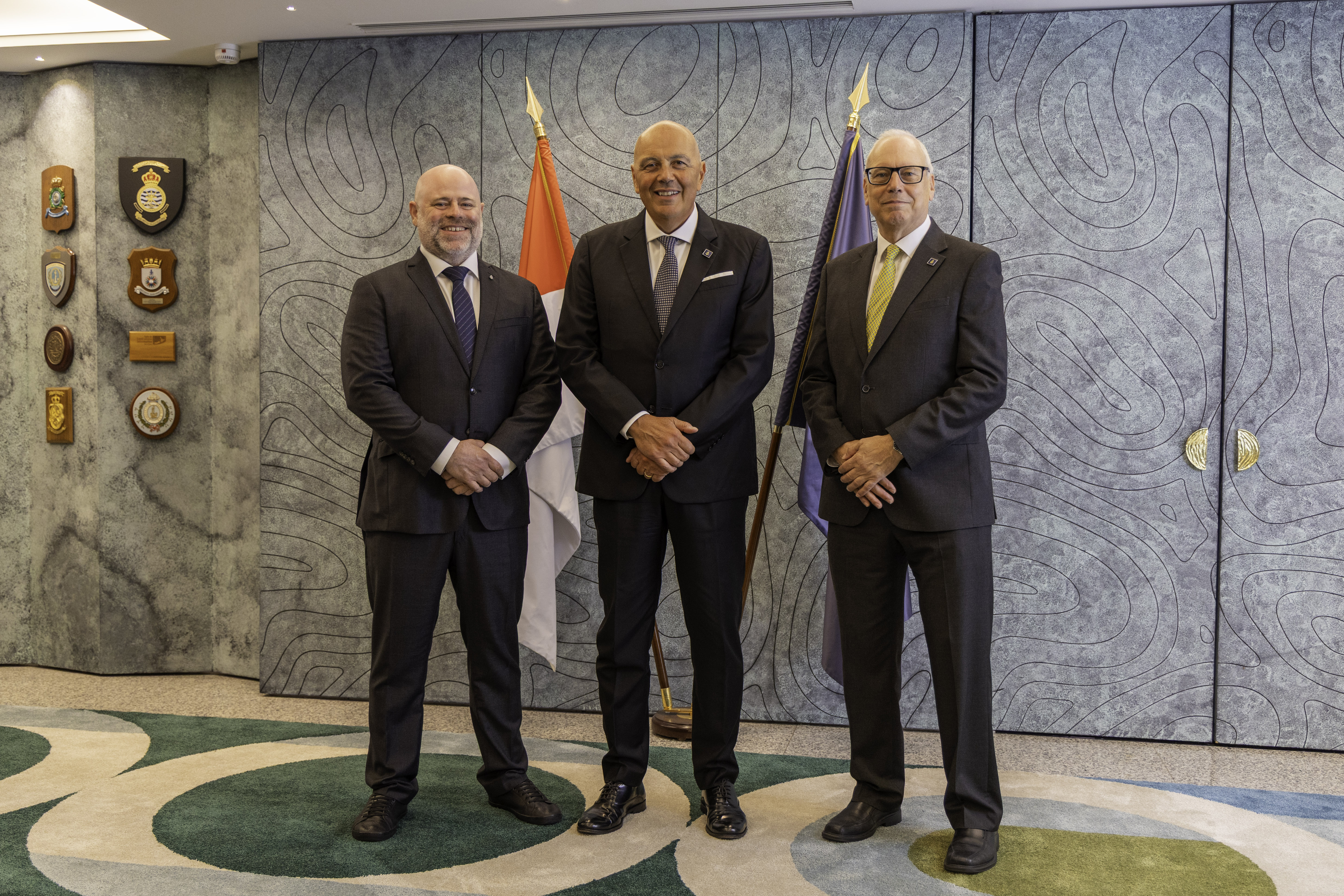
Dr. John Nyberg will complete the second three years of his current mandate as the Director of Technology. During his first three years, he led the technical programme through the period in which S-100 moved from implementation to delivery. His third year in office culminated in the establishment of the IHO Infrastructure Centre (IHOIC) in Busan and a shift toward sustaining the first operational elements of the S-100 ecosystem: the registries, discovery services, validation tooling, and the security scheme. The next three years, in his view, are about a different kind of work: ensuring the reliability of what has been built and making sure it is achievable for every Member State. That means bringing the IHOIC to full service, holding the phased implementation timeline agreed with IMO, implementing the S-100 Phase 2 product specifications, and aligning capacity development squarely with the technical programme so that the states with the least hydrographic capacity are not the last to benefit from the standard. It also means carrying marine geospatial information beyond the bridge and into the broader work of ocean governance and international ocean policy, where hydrographic data increasingly underpins decisions well outside navigation.
"S-100 was never just a new way to encode an electronic chart. It is the framework that lets marine geospatial data work together as an integrated system, and the test of the next three years is whether that framework becomes ordinary infrastructure for every Member State, not an advantage for a handful of them. Standards are only as good as the number of countries that can actually use them" said Dr John Nyberg.
This new directing team will lead the IHO until the autumn of 2029. The IHO Secretariat based in Monaco is composed of twenty staff and is complemented by three Project Officers from Japan, Republic of Korea and Peru.


Share this page: